A gangster drama that quietly became a menswear reference
Thomas Shelby never raises his voice. He barely needs to. The tweed does most of the talking before he says a word — and that's exactly why, more than a decade after Peaky Blinders first aired, menswear editors are still writing about his wardrobe.
There's something counterintuitive about a Birmingham street gang boss becoming one of television's most referenced style icons. Peaky Blinders isn't a fashion show. It's a violent, morally murky crime drama set in the aftermath of the First World War. And yet Cillian Murphy's Thomas Shelby, in a flat cap and a close-cut tweed suit, has done more to revive interest in British tailoring than most actual fashion campaigns.
This guide isn't a costume walkthrough. It's a modern menswear guide inspired by Thomas Shelby — built from real, wearable clothing you can put on for work tomorrow, not a Halloween rack.
That distinction matters more than it might seem. Plenty of "dress like Thomas Shelby" content out there defaults to matched three-piece suit rentals and prop flat caps — fine for a themed party, useless for anyone who actually wants to wear something inspired by the look on a Tuesday. What follows is different: five pieces, each one a genuine, currently-available garment, each one explained for why it works rather than just what it is.
Who Is Thomas Shelby?
A war veteran who built an empire out of a razor-blade cap and a betting shop
Thomas Shelby is the central character of Peaky Blinders, a BBC crime drama set largely in 1920s Birmingham, England. Played by Cillian Murphy, Shelby leads the Peaky Blinders gang — named for the razor blades reportedly sewn into the brims of their flat caps — and spends the series expanding from local bookmaking into increasingly ambitious, and increasingly dangerous, criminal and political territory.
He's a First World War veteran carrying visible trauma beneath an almost unreadable exterior, and that contrast is the whole character in miniature: chaos underneath, total control on the surface. His clothing does the same job. Nothing about his wardrobe is loud. Every piece is disciplined, tailored, and quiet — which is precisely why it reads as more dangerous than anything flashy could.
Across six seasons, Shelby's clothing barely changes in its fundamentals even as his fortune and power grow enormously. That consistency is itself a character choice — a man who could easily afford to dress louder as he becomes wealthier, and deliberately doesn't. The wardrobe stays disciplined because the character's entire self-presentation depends on control, not display.
Why His Style Became Iconic
Authority you can see before he says a word
Shelby's style works because it stacks several psychological signals on top of each other, and none of them require volume.
Confidence Through Restraint
He never dresses to be noticed. He dresses to be taken seriously. That distinction is the entire foundation of his wardrobe, and it's a harder trick to pull off than anything built on logos or color. Anyone can buy an outfit designed to turn heads. Building one that commands a room through fit and fabric alone takes considerably more discipline, both from the wearer and the tailor.
British Craftsmanship
Tweed, wool, and tailored cuts root the look firmly in a British working-class-turned-powerful tradition — clothing built for durability and structure, not decoration. This is workwear philosophy applied to formal dressing, and that hybrid is a big part of why the look reads as authentic rather than aspirational costume.
Simplicity
Every outfit is built from a tight, repeating set of pieces. There's no ornamentation competing for attention, which lets the fit and the posture carry the entire read. A person could describe Shelby's entire wardrobe in a single sentence, and that's not a limitation — it's the whole strategy.
Military Influence
Shelby's background as a war veteran shows up in the discipline of the tailoring — high-buttoned, close-cut, upright. It's civilian clothing worn with a soldier's posture, and that posture does as much visual work as the clothing itself.
Working-Class Elegance
This is not old-money style. It's clothing that had to earn its authority, which is a big part of why it still resonates with modern audiences who aren't interested in inherited-wealth signaling. There's a version of authority coded through inheritance and old tailoring houses, and there's a version coded through discipline and self-made power. Shelby's wardrobe is unmistakably the second kind.
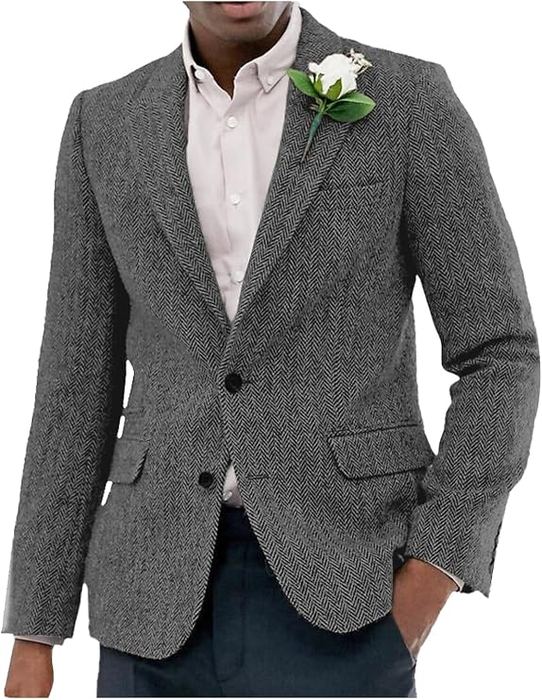
Why he'd wear it: this is the piece that makes the entire outfit instantly readable. Textured, structured, and tailored close to the body — the single most defining element of the look.
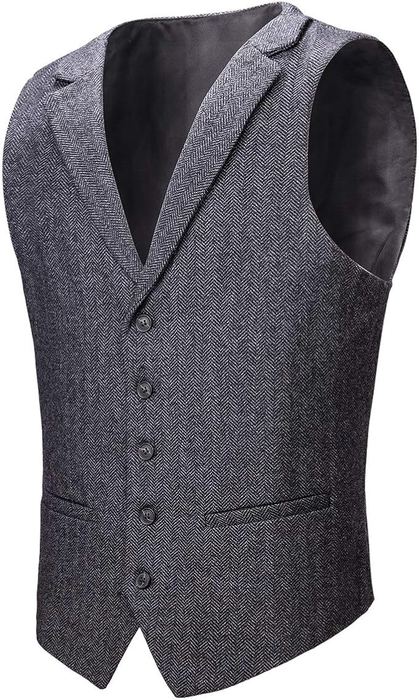
Why he'd wear it: optional, but this is the piece that turns a two-piece look into the full three-piece reference. Matches the blazer's texture for a cohesive, tailored finish.
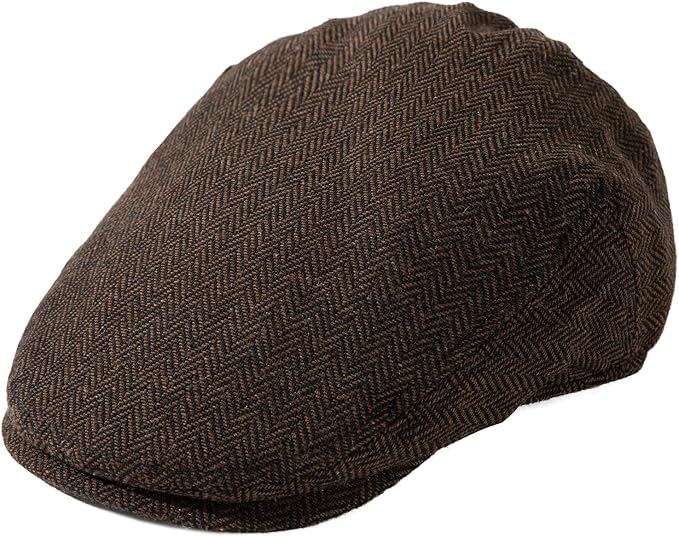
Why he'd wear it: the single most recognizable piece he owns. Small, stiff-brimmed, and low-profile — the detail that makes the whole outfit unmistakable at a glance.
Tweed is the fabric doing the most identity work in Shelby's whole wardrobe. It's rugged, textured, and inherently British — a material built for the outdoors and adapted into tailoring, which gives it a working-class credibility that smooth worsted wool doesn't carry. Herringbone specifically, with its zigzag weave, adds visual depth without adding color or pattern noise.
Grey is the right call for a modern everyday version: versatile enough to pair with almost anything, formal enough to read as a proper jacket rather than a costume piece. Look for a notch lapel (sharper and more standard than a peak lapel, which reads more formal-eveningwear), single-breasted construction, and a close, tailored cut through the body — Shelby's cut is lean, never boxy. A modern alternative that keeps the spirit intact: any well-cut herringbone or houndstooth sport coat from a mainstream menswear retailer, as long as the fit is trim rather than relaxed.
The White Dress Shirt
Cotton, point collar, slim through the body. This is the quiet foundation the rest of the outfit sits on top of, and its entire job is to not compete with the tweed. A crisp white shirt reads as disciplined and put-together without adding a single additional visual element — which is exactly the kind of restraint the whole wardrobe is built on.
Tweed Trousers
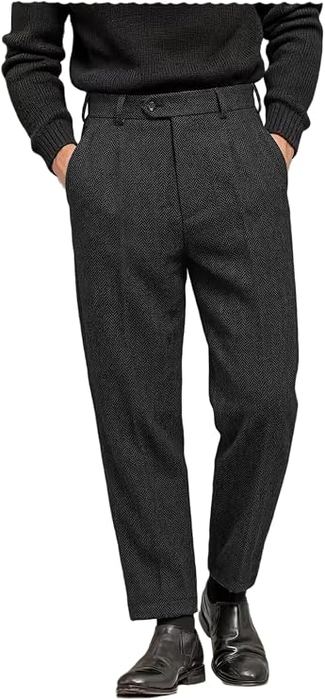
High-rise, often pleated at the front, cut straight through the leg rather than tapered or skinny. This is one of the biggest differences between Shelby's actual proportions and most modern trouser fits — 1920s trousers sat higher on the waist and had more room through the leg than contemporary slim-fit trousers, and that higher rise is part of what gives the whole outfit its upright, disciplined posture. Matching the trouser fabric to the jacket (same herringbone family, not necessarily identical) keeps the look cohesive without requiring a literal matched three-piece suit.
Oxford Shoes
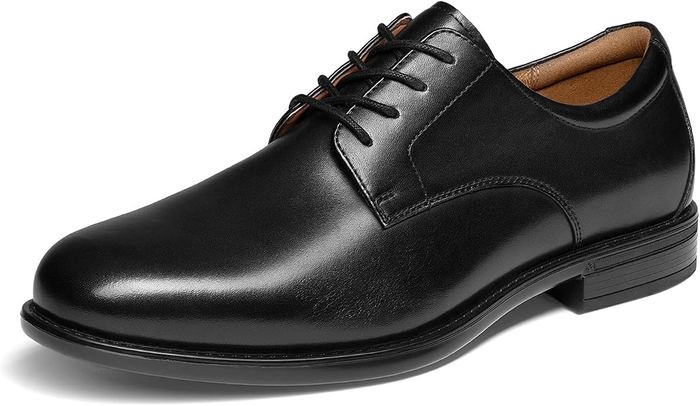
Polished black leather, closed lacing, often with a cap toe. Oxfords are the most formal standard shoe construction, and that formality matters here — Derby shoes (open lacing) read slightly more casual, Chelsea boots read more modern-minimalist, and loafers read far too relaxed for this wardrobe entirely. An Oxford is the only shoe in that lineup disciplined enough to match the rest of the outfit.
The Flat Cap
The single most recognizable piece of the entire look, and worth understanding properly. A true flat cap has a small, stiff brim and sits low and close to the head. A newsboy cap is fuller and rounder on top, often with a button at the crown and a snap brim — technically a related but distinct style. A baker boy cap sits somewhere between the two, fuller than a flat cap but without the newsboy's paneled construction. Peaky Blinders blends elements of all three depending on the exact cap, but the flat cap proper — low, tight, minimal — is the most authentic reference point.
To wear one today without looking costumed: keep it in a muted tweed or wool, avoid anything oversized or cartoonishly large, and pair it with otherwise simple modern clothing rather than a full period outfit. A flat cap over a plain sweater and jeans reads as intentional and current. A flat cap over a full three-piece suit reads as cosplay unless the rest of the tailoring is genuinely excellent.
The Optional Waistcoat
You don't need all three pieces to get this right
Thomas Shelby is often remembered specifically for the full three-piece suit — jacket, waistcoat, and trousers, all matching. It's a genuinely great look, and if you want the most complete version of the reference, the waistcoat belongs in the outfit.
But it's worth saying plainly: a tweed blazer, a dress shirt, tailored trousers, Oxford shoes, and a flat cap already recreate the essence of the character for everyday wear. The waistcoat adds formality and authenticity, but it's not load-bearing for the reference to land. If you're building this for the office or a casual outing, the four-piece version reads clearly as Shelby-inspired without tipping into full period costume — and it's considerably easier to actually wear on a normal day than a matched three-piece suit.
Color Palette
Muted tones, deliberately
GreyThe primary tone across jackets, waistcoats, and trousers — versatile and understated.
BrownCommon in caps and occasional outerwear, adding warmth without breaking the muted palette.
WhiteReserved almost entirely for the shirt, providing the one clean contrast point in the outfit.
CharcoalA darker alternative to grey for more formal or evening-adjacent looks.
BlackShoes, and occasionally outerwear — always structural, never decorative.
NavyAn occasional variation that keeps the same muted energy as grey and charcoal.
None of these colors compete with each other, and none of them are chosen to stand out. That's deliberate. Muted, desaturated tones read as controlled and serious in a way that bright colors simply can't — there's a reason boardrooms and military uniforms both lean the same direction. Shelby's wardrobe borrows that same logic for a very different kind of authority.
Fabrics
Texture is the whole point
Take the color away and Shelby's wardrobe is still doing a lot of visual work, purely through texture. Tweed carries rough, woven depth. Wool adds structure and warmth without shine. Cotton, in the shirt, is the one smooth surface in the whole outfit, which is exactly why it reads as clean rather than flat. Leather, in the shoes, adds one polished, reflective surface that contrasts against everything else's matte texture.
That contrast — mostly matte, one polished point at the feet — is doing more to make the outfit look intentional than color choice ever could. A cheap, flat polyester blazer breaks this instantly, which is exactly why fabric quality matters more here than almost any other style guide you'll read.
Behind The Costume
How a TV wardrobe department built a look that outlived the show
Peaky Blinders' costume department worked from real references — archival photography of 1920s Birmingham street gangs and working-class British menswear — but consistently favored a leaner, more tailored cut than most men actually wore at the time. Real 1920s working-class clothing tended to be looser and less fitted; the show's version is closer to contemporary tailoring dressed in period fabric and cut lines.
That choice is exactly why the look translates so well to modern menswear. A wardrobe built to be strictly, literally accurate to 1920s Birmingham street style would feel like a museum exhibit today. A wardrobe built with a modern eye toward fit, wearing period fabric and cut cues as inspiration rather than a blueprint, feels timeless instead — which is the entire reason this guide can recommend real, current Amazon clothing rather than sending you to a costume rental.
Fun Fact
The show's title itself comes from the historical Birmingham "Peaky Blinders" gang, whose name is popularly linked to razor blades reportedly sewn into cap peaks — though the historical accuracy of that specific detail is debated among historians, and the razor-cap detail may be more legend than documented fact.
Costume designers working on long-running television shows face a specific problem: the clothing has to survive years of scrutiny across dozens of episodes, at every camera angle, in every lighting condition, without ever looking tired or repetitive. Peaky Blinders solved this by picking a genuinely small, disciplined wardrobe rotation and trusting fit and fabric to keep it visually interesting rather than constantly introducing new pieces. That's a costume-department philosophy worth borrowing for real life too — a handful of well-fitted, well-made pieces will outperform a large wardrobe of mediocre ones almost every time.
Historical Accuracy
What the show got right, and what it modernized
Genuine 1920s British working-class menswear shared plenty of DNA with what's on screen: flat caps, tweed, waistcoats, and high-waisted trousers were all common. Where the show diverges is fit. Real period clothing, especially working-class clothing, was typically cut looser and less precisely tailored than what a costume department with a television budget and a leading man can produce. Shelby's suits are closer through the body, more deliberately structured, than most actual 1920s Birmingham men would have worn day to day.
That's not a flaw — it's a translation choice, and it's the right one for a show (and a style guide) that wants the look to feel powerful and current rather than accurate to the point of looking baggy and dated on screen.
How To Dress Like Thomas Shelby Today
Six ways to wear this without looking like you're in costume
OfficeTweed blazer over a crisp shirt, tailored trousers, Oxfords. Skip the cap indoors.
Business CasualSwap the dress shirt for a fine-gauge knit under the blazer; trousers stay tailored.
WinterAdd a wool overcoat in a matching muted tone; the flat cap does real work here, both stylistically and practically.
WeddingsFull three-piece with the waistcoat, dress shirt, and Oxfords — this is the one occasion built for the complete look.
Smart CasualBlazer with dark jeans instead of tailored trousers, still with the Oxford shoes to keep it grounded.
Date NightWaistcoat and shirt without the jacket, sleeves rolled slightly — sharp without being stiff.
The throughline across every version: keep the palette muted, keep the fit close, and let one piece (usually the cap, sometimes the waistcoat) carry the reference rather than trying to replicate every element at once.
Common Mistakes
What breaks the look instantly
Cheap costume suits — shiny, stiff polyester reads as Halloween the moment someone gets close. Fabric quality is not optional here.
Pinstripe "gangster" suits — a different, more American, more theatrical gangster reference entirely. Shelby's suits are textured tweed, not pinstriped worsted.
Oversized caps — a flat cap that's too large or too soft loses the sharp, structured read and starts looking like a costume prop.
Skinny trousers — too modern and too tight a cut; the high-rise, straighter leg is central to the period-adjacent posture.
Bright shirts — anything beyond white or the occasional pale neutral breaks the restrained palette the whole look depends on.
Chunky sneakers — instantly modern and casual in a way that clashes with every other tailored element.
Cheap polyester fabrics — texture is doing half the work in this wardrobe; a flat, shiny synthetic fabric undoes it immediately.
Hair & Grooming
The haircut is doing more than people give it credit for
Shelby's haircut — short, close-cropped sides with more length and texture on top — is a period-accurate undercut, and it pairs with the tailoring more than people realize. The sharp sides mirror the sharp tailoring; the slight texture on top keeps it from reading as too severe. Facial hair, when present, stays close and controlled rather than a full or elaborate beard, in keeping with the disciplined, no-excess theme running through the entire look.
The Psychology Behind His Style
Why quiet clothing reads as more powerful than loud clothing
There's a reason people associate this wardrobe with leadership and discipline rather than menace alone. Clothing that doesn't need to compete for attention signals that the person wearing it doesn't need to compete for authority either — it's already assumed. Every element of Shelby's look reinforces that: no logos, no bright colors, no visible effort to impress. The message isn't "look at me." It's "I don't need you to."
That reads as more compelling in 2026 than it might have a decade ago. A lot of contemporary menswear leans heavily on branding and logo visibility as shorthand for status. Shelby's wardrobe offers the opposite proposition — status communicated entirely through fit, fabric, and posture, with zero reliance on anyone recognizing a label. That's a genuinely harder thing to fake, which is exactly why it still reads as authoritative rather than performative.
Influence on Modern Fashion
How one show revived interest in heritage menswear
Peaky Blinders is widely credited with a measurable bump in interest around tweed, tailored blazers, and flat caps in the years following its release — heritage British menswear categories that had been treated as costume-adjacent or old-fashioned suddenly became aspirational again. Retailers noted renewed demand for flat caps specifically, a category that had been fairly dormant in mainstream menswear for years. The show didn't invent interest in British tailoring, but it gave an entire generation a modern, non-stuffy reason to care about it.
It also did something less obvious: it made restraint look aspirational again, in a menswear landscape that had spent years rewarding maximalism — bigger logos, louder prints, more layers. Shelby's five-piece wardrobe, repeated with total confidence episode after episode, made a strong case that discipline photographs just as well as excess. That case has aged well.
Fun Facts
A few things worth knowing
The Cap's Name May Be a LegendThe idea that Peaky Blinders sewed razor blades into their cap peaks is popularly repeated but historically debated — it may be more myth than documented fact.
Modernized CutThe show's costume department deliberately tailored the fit closer to the body than most actual 1920s working-class men wore, favoring a leaner, more contemporary read.
A Genuine Fashion BumpFlat cap and tweed sales saw a noted resurgence in the years after the show's release, a category that had been fairly dormant in mainstream menswear.
Texture Over ColorAlmost the entire wardrobe sits within a narrow grey-brown-charcoal range, meaning fabric texture — not color — carries nearly all the visual interest.
FAQ
Questions, answered
How do I dress like Thomas Shelby?
Start with a grey herringbone tweed blazer, add a white tailored dress shirt underneath, match it with tweed trousers, finish with black leather Oxford shoes and a tweed flat cap. A waistcoat is optional but adds authenticity.
What suit does Thomas Shelby wear?
Primarily three-piece tweed and wool suits in muted greys, browns, and charcoals, cut close and tailored to a lean, upright line rather than a boxy one.
What hat does Thomas Shelby wear?
A tweed flat cap, sometimes called a newsboy or Ivy cap depending on the exact shape. It's the single most recognizable piece of his wardrobe.
Does Thomas Shelby wear tweed?
Yes, extensively. Tweed appears in his jackets, waistcoats, trousers, and flat cap, giving the whole wardrobe a consistent texture and period-appropriate feel.
What shoes does Thomas Shelby wear?
Polished black leather Oxford shoes, occasionally boots. Always structured and formal, never casual or sport-influenced.
What colour suits does Thomas Shelby wear?
Mostly muted, desaturated tones — grey, charcoal, brown, and navy. Bright or flashy colors almost never appear.
Is Thomas Shelby's style expensive?
The original costuming used quality wool and tweed, but the look itself is built on tailoring and texture rather than luxury branding, so a modern, affordable version is very achievable.
Can I wear a flat cap casually?
Yes. Paired with a blazer or knitwear and jeans, a flat cap works well outside formal settings, as long as the rest of the outfit stays simple.
Is Thomas Shelby old money?
No. The character is working-class in origin, and his tailoring reflects earned, working-class elegance rather than inherited wealth or old-money style codes.
Is Peaky Blinders fashion historically accurate?
Loosely. The show's costume department drew on real 1920s Birmingham street-gang style but modernized the cut for television, favoring a leaner, more tailored fit than most working-class men actually wore at the time.
What's the difference between a flat cap and a newsboy cap?
A flat cap has a small, stiff brim and sits low and close to the head. A newsboy cap is fuller and rounder on top, often with a button at the crown, and reads slightly more casual.
Do I need a waistcoat to look like Thomas Shelby?
No. A blazer, shirt, trousers, shoes, and flat cap already capture the essence of the look for everyday wear. The waistcoat is a strong addition, not a requirement.
What fabric is most important to the look?
Tweed. It appears across the jacket, waistcoat, trousers, and cap, and it's the single fabric doing the most work to establish the wardrobe's texture and period feel.
Can this outfit work for the office?
Yes — a grey tweed blazer with tailored trousers and Oxford shoes reads as sharp, professional workwear in almost any modern office.
Are Derby shoes an acceptable substitute for Oxfords?
They're close but not identical — Derby shoes have open lacing and read slightly more casual than the closed-lacing formality of an Oxford, which is the more accurate reference.
What trouser rise should I look for?
High-rise, sitting at or above the natural waist, which is closer to genuine 1920s proportions than most modern mid-rise trousers.
Is this outfit appropriate for a wedding?
Yes, especially the full three-piece version with the waistcoat — it reads as formal, tailored, and distinctive without being a costume.
What's the most affordable way to build this look?
Start with the blazer and flat cap — the two most identity-defining pieces — and build outward from there rather than buying a matched three-piece suit all at once.
Does the flat cap work with modern casual clothing?
Yes, especially over simple knitwear or a plain jacket. It's one of the few period pieces that translates cleanly into fully modern outfits.
Why does muted color read as more powerful than bright color?
Restrained, desaturated tones signal control and seriousness in a way loud colors don't, which is part of why so many authority-coded uniforms — military, boardroom, and otherwise — lean the same direction.
Styling Notes
How to wear it right
🧥Keep the fit close through the body — nothing here is oversized
🎨Stay inside the muted grey-brown-charcoal palette
🧵Let texture, not color, do the visual work
🧢Size the cap correctly — oversized reads as costume instantly
👞Keep shoes polished; scuffed leather breaks the discipline of the look
🎩Skip the cap indoors or in formal office settings