Real Amazon clothing, not a costume — the charcoal suit, the red tie, and the obsessive precision of American Psycho's most terrifying business card enthusiast.
★★★★★ Fan Favorite5 PiecesReal Products$174.95 Total5-Min Build
The Story
Wall street banker. Twenty-seven years old. Lives in the American Gardens Building.
On paper, Patrick Bateman has it all. A corner office at Pierce & Pierce, a body sculpted by a punishing morning routine, and a wardrobe so precise it could pass a military inspection.
He's the kind of man other men in his industry secretly measure themselves against — the suit always pressed, the shirt always white, the tie never one shade off. And that's exactly the point. Bateman's entire identity is built on the surface, because underneath it, as American Psycho slowly reveals, there's nothing there at all. The tailoring isn't just style. It's armor.
Christian Bale's performance turned that emptiness into one of the most quoted, memed, and endlessly recreated looks in movie history — not because the suit is flashy, but because it's terrifyingly correct.
Who Is Patrick Bateman?
The most successful man in the room, and the least real
Patrick Bateman is a 27-year-old mergers and acquisitions specialist at the fictional Wall Street firm Pierce & Pierce, living on the eleventh floor of the American Gardens Building on West 81st Street. He's wealthy, immaculately groomed, and by every visible measure, thriving — dinner reservations at the right restaurants, a rigorous skincare routine, business cards compared obsessively against his colleagues' in a scene that's become one of cinema's most quietly unhinged moments.
Beneath the polish, Bateman is also — in a story that never lets the audience fully separate fantasy from reality — a serial killer, and the novel and film both use his obsessive self-presentation as the mask for that void. He's a satire of 1980s excess taken to its most extreme conclusion: a man who has optimized every visible surface of his life and still feels like nothing is underneath.
Patrick Bateman is a fictional character created by Bret Easton Ellis for his 1991 novel American Psycho, brought to the screen in the 2000 film adaptation directed by Mary Harron, with Christian Bale in the role that would come to define his early career.
Behind The Look
Nothing about this suit is an accident
Bateman's wardrobe is deliberately minimal — charcoal, white, black, one accent color. That restraint is the whole point. In a decade famous for excess, Bateman's power move is control: nothing loud, nothing casual, nothing that suggests he isn't in complete command of every detail of his appearance.
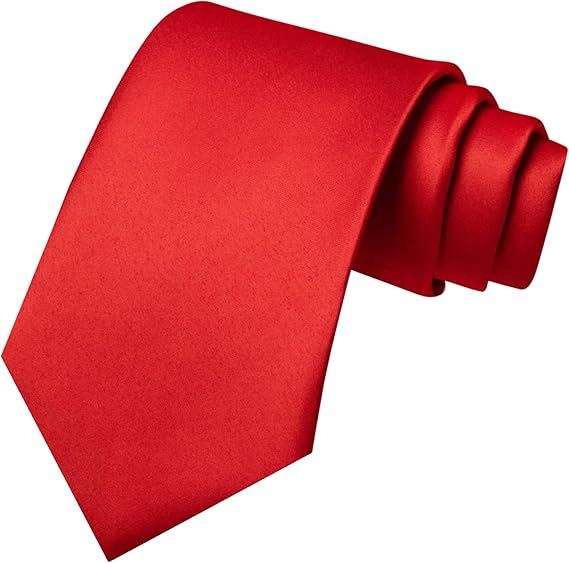
The tie is the one place he allows himself a statement. Against a charcoal suit and white shirt, a solid red tie reads as confidence rather than decoration — sharp, deliberate, and just aggressive enough to match the character underneath the tailoring.
Fun Fact
Christian Bale has said in interviews that he modeled parts of Bateman's unsettling, hollow confidence on a certain kind of late-night TV host energy — a smile that never quite reaches anywhere real. It's a detail that lines up perfectly with a wardrobe built entirely around surface perfection.
Why It Became Iconic
A suit that still reads as menacing, decades later
Most villain wardrobes lean into the villain part — dark colors, dramatic silhouettes, something visibly off. Bateman's doesn't. His outfit is, on paper, just an extremely good business suit. That's exactly why it's stuck around as a cultural touchstone: it's genuinely wearable, genuinely normal, and genuinely unsettling all at once, because the horror in American Psycho was never in how Bateman looked — it was in how easily he blended in.
Two decades later, Bateman's suit has had a strange second life online, adopted half-ironically as a symbol of hyper-competence and control. The joke only works because the outfit is real — a charcoal jacket, a white shirt, a red tie, polished oxfords. No costume shop required.
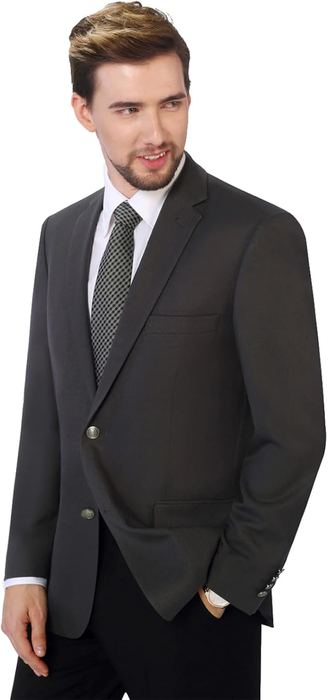
Why he'd wear it: a single-breasted charcoal jacket, buttoned, structured, and precise. Nothing casual, nothing textured — exactly the kind of tailoring Bateman would inspect under office lighting before deciding it was acceptable.
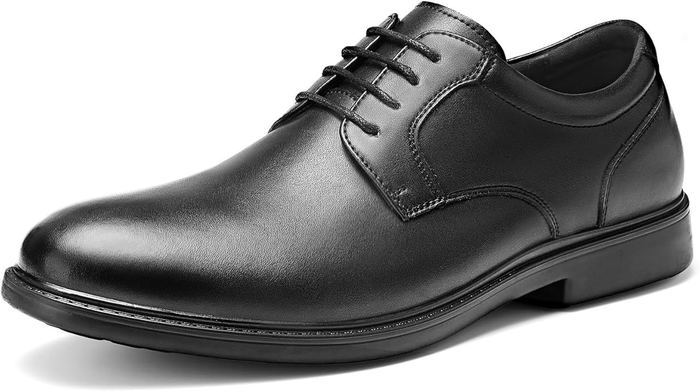
Why he'd wear it: formal, lace-up, and shined to a mirror finish — the kind of shoes that get inspected before anyone else in the room even notices footwear exists.
Why he'd wear it: the one piece that isn't neutral, and the one piece that does all the talking — sharp, confident, and the exact shade that makes the whole outfit feel deliberate rather than default.
👔Keep the jacket fully buttoned — Bateman never lets it hang open
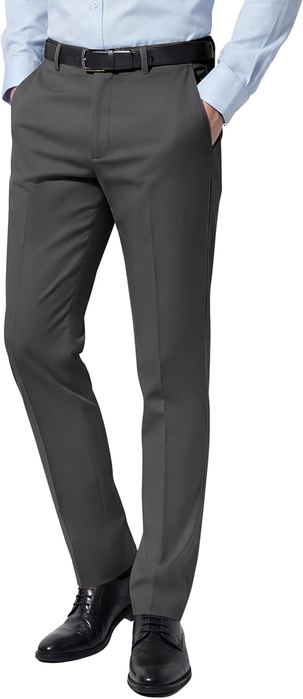
🎨Charcoal jacket and trousers should match as closely as possible
✂️Everything pressed. No wrinkles, no exceptions
🩸The red tie is solid, not patterned — that's the whole point
🚫Skip texture entirely — no linen, no tweed, no knit
💼Confidence and stillness sell this look more than any single piece
American Psycho Trivia
A few things worth knowing
The Address That Never ExistedBateman's building, the American Gardens Building on West 81st Street, is fictional — the real building used for exterior shots is located nearby on the Upper West Side.
Christian Bale Almost Wasn't CastBale was reportedly warned that taking the role could be "professional suicide" — he took it anyway, and it became one of his most iconic performances.
Based On A 1991 NovelThe film is adapted from Bret Easton Ellis's controversial novel of the same name, published nearly a decade before the movie.
Directed By Mary HarronThe 2000 adaptation was directed by Mary Harron, who brought a sharper satirical edge to Ellis's source material.
FAQ
Questions, answered
What does Patrick Bateman wear?
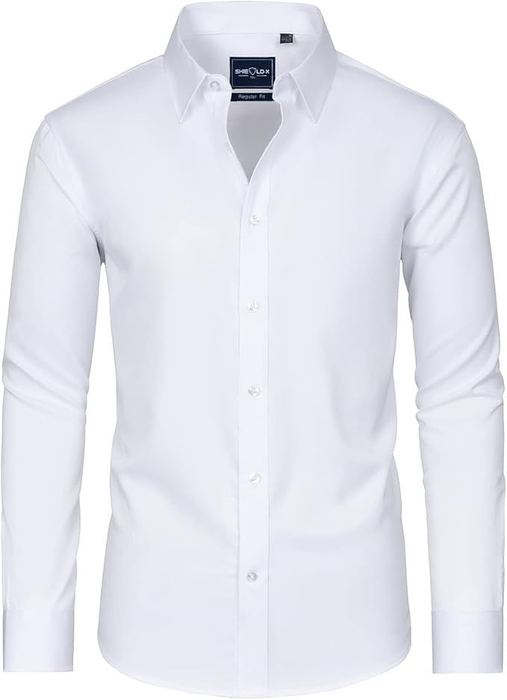
A charcoal single-breasted suit jacket, a crisp white dress shirt, a solid red silk tie, matching charcoal trousers, and black leather oxford shoes — a minimal, obsessively tailored power suit.
Why does Patrick Bateman wear a red tie?
Bateman's wardrobe is built around restraint with one sharp accent. A solid red tie against charcoal and white reads as confident and deliberate without breaking his otherwise minimal palette.
Is this a costume?
No. Every piece is ordinary business formalwear — a suit jacket, dress shirt, trousers, tie, and oxfords. Nothing about it is a costume; it's simply the most controlled, correct version of a suit you own.
Who played Patrick Bateman?
Christian Bale played Patrick Bateman in the 2000 film adaptation of American Psycho, directed by Mary Harron.
Is American Psycho based on a book?
Yes. The film is based on Bret Easton Ellis's 1991 novel of the same name.
How old is Patrick Bateman?
Bateman is 27 years old at the start of the story, working as a mergers and acquisitions specialist at the fictional Wall Street firm Pierce & Pierce.